Top 10 Design Awards to Aim for in 2026
The design competitions that actually matter — ranked by prestige, credibility, and what they'll do for your career.

The design competitions that actually matter — ranked by prestige, credibility, and what they'll do for your career. This list is especially relevant if you're planning to enter a UI/UX competition and submit your work for a 2026 UI/UX design award.
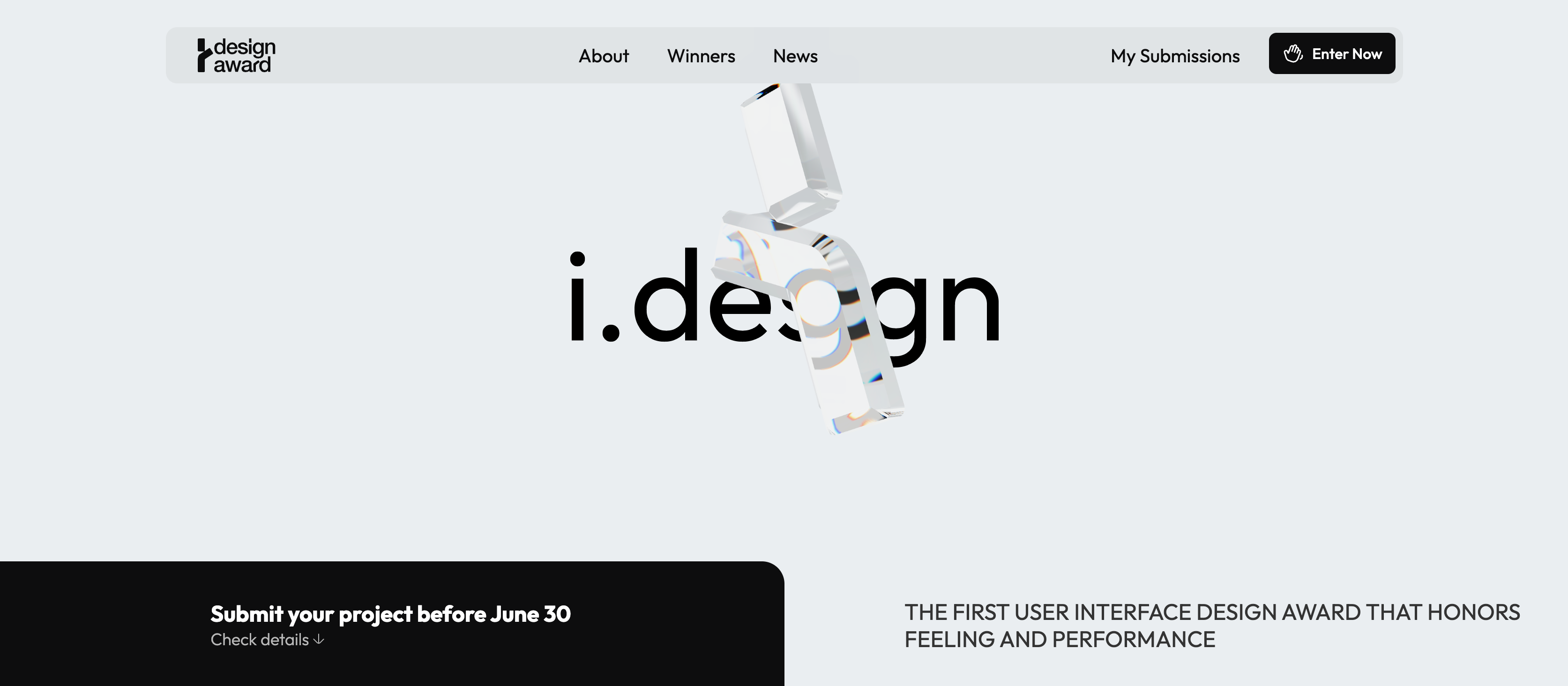
i.design Award — The Interface Design Award That Honors Feeling and Performance
A design award built as a real competition, not a symbolic badge. i.design evaluates work through a clear emotional–functional framework, combining fair judging with transparent scoring. Each project is assessed across three core dimensions: emotion — how the experience feels; function — how clearly and effectively it works; and impact — the measurable results it creates. The award focuses on UI/UX, interface design, and brand-led digital experiences, bringing together creative studios, tech companies, product teams, and independent creators. Submissions are reviewed by a cross-disciplinary jury of UX experts and marketing professionals, ensuring that both experience quality and real-world effectiveness are evaluated together.
Focus: UI/UX design.
Who can enter: Creative studios and tech companies, product teams, independent creators.
Jury: A mix of UX pros and marketing minds who speak both languages.
Fees: €400
How to enter: Check the full details and submission guidelines at i-designaward.com
Why it’s worth it: If you want to go beyond pay-to-win mechanics and earn recognition through real, framework-based competition — this award is built for you.
iF Design Award
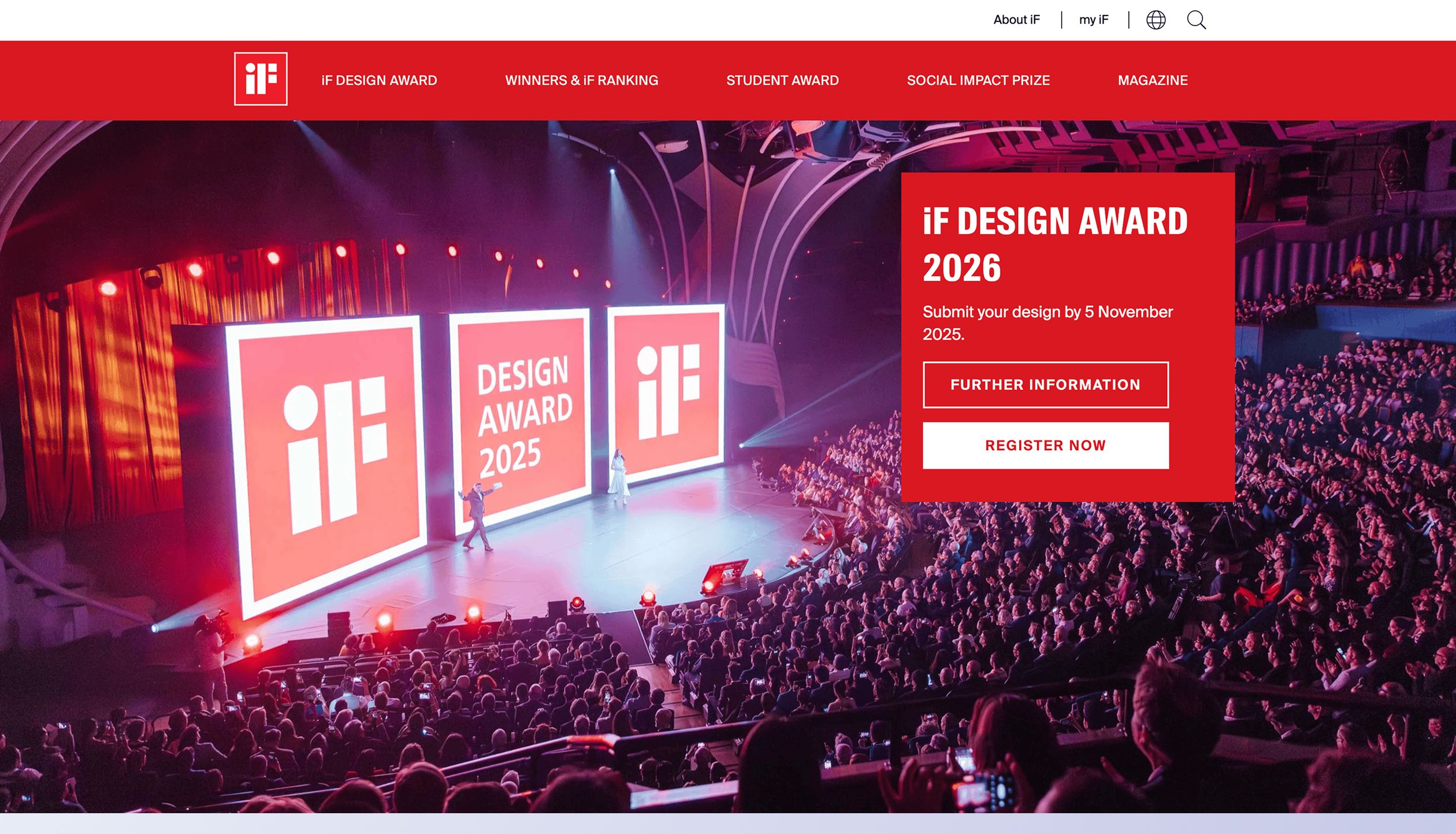
The iF Design Award has been around long enough to outlive most trends. It spans nine disciplines — from product design to digital interfaces — and every winner earns a spot in the iF Design Index, which is basically the hall of fame for creative work.
Focus: Product, communication, UX, digital.
Who can enter: Designers, agencies, manufacturers, brands.
Jury: International experts judging form, function, and originality.
Fees: Around €300–€500, plus possible winner fees.
How to enter: ifdesign.com
Why it’s worth it: It carries global credibility, especially in Europe and Asia. Winning one means your work gets seen — and remembered.
Red Dot Design Award
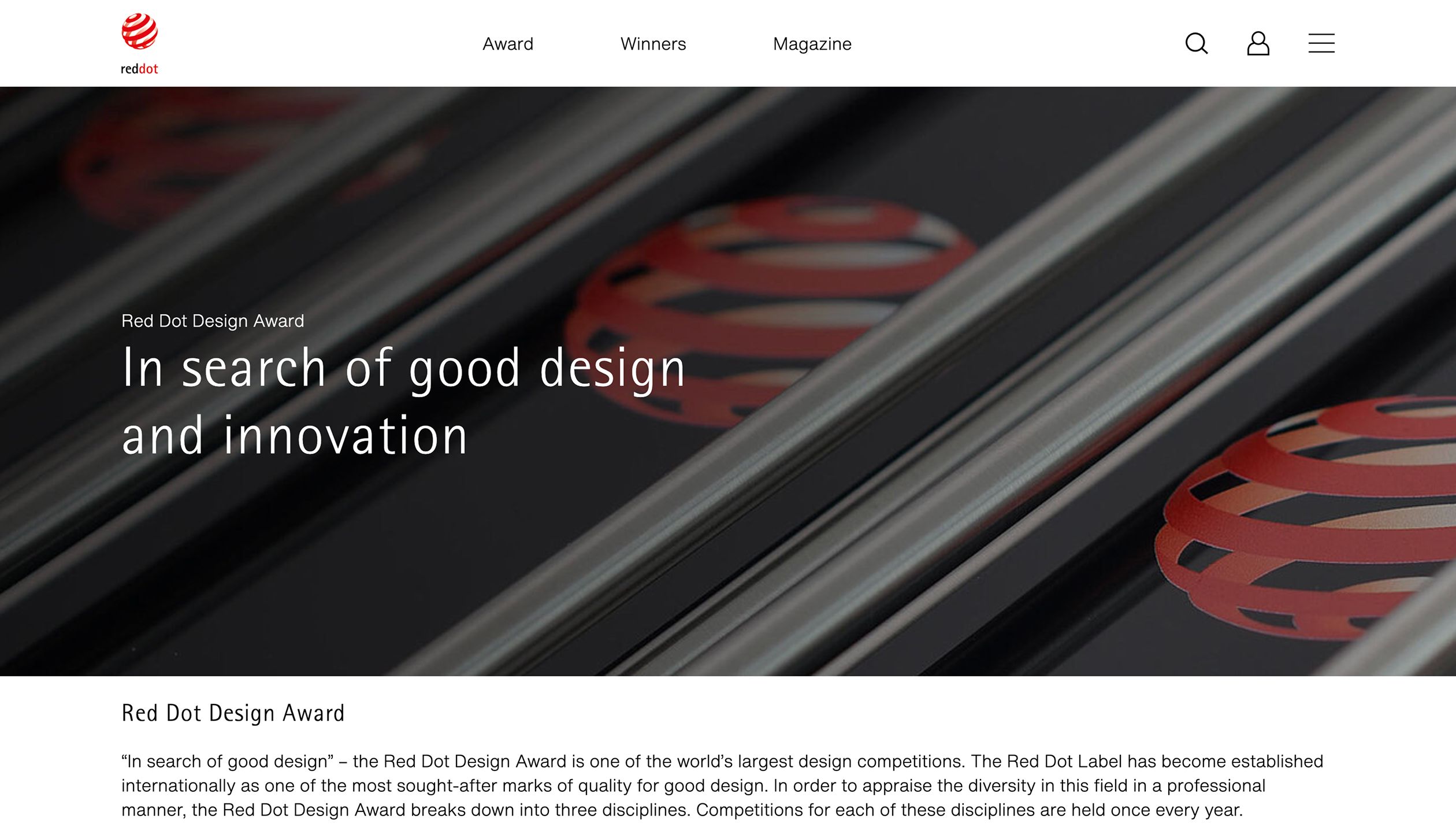
You’ve definitely seen that red dot sticker before — it’s one of the most recognizable design marks in the world. Red Dot celebrates design that balances innovation with clarity, honoring projects that don’t just follow trends but set them.
Focus: Product, brand, and communication design.
Who can enter: Agencies, studios, brands, independents.
Jury: Top designers, professors, and industry figures.
Fees: Roughly €470–€890 depending on the phase.
How to enter: red-dot.org
Why it’s worth it: Red Dot is global currency in design credibility. That tiny mark on your website or packaging instantly tells clients, “This team delivers.”
A’ Design Award & Competition
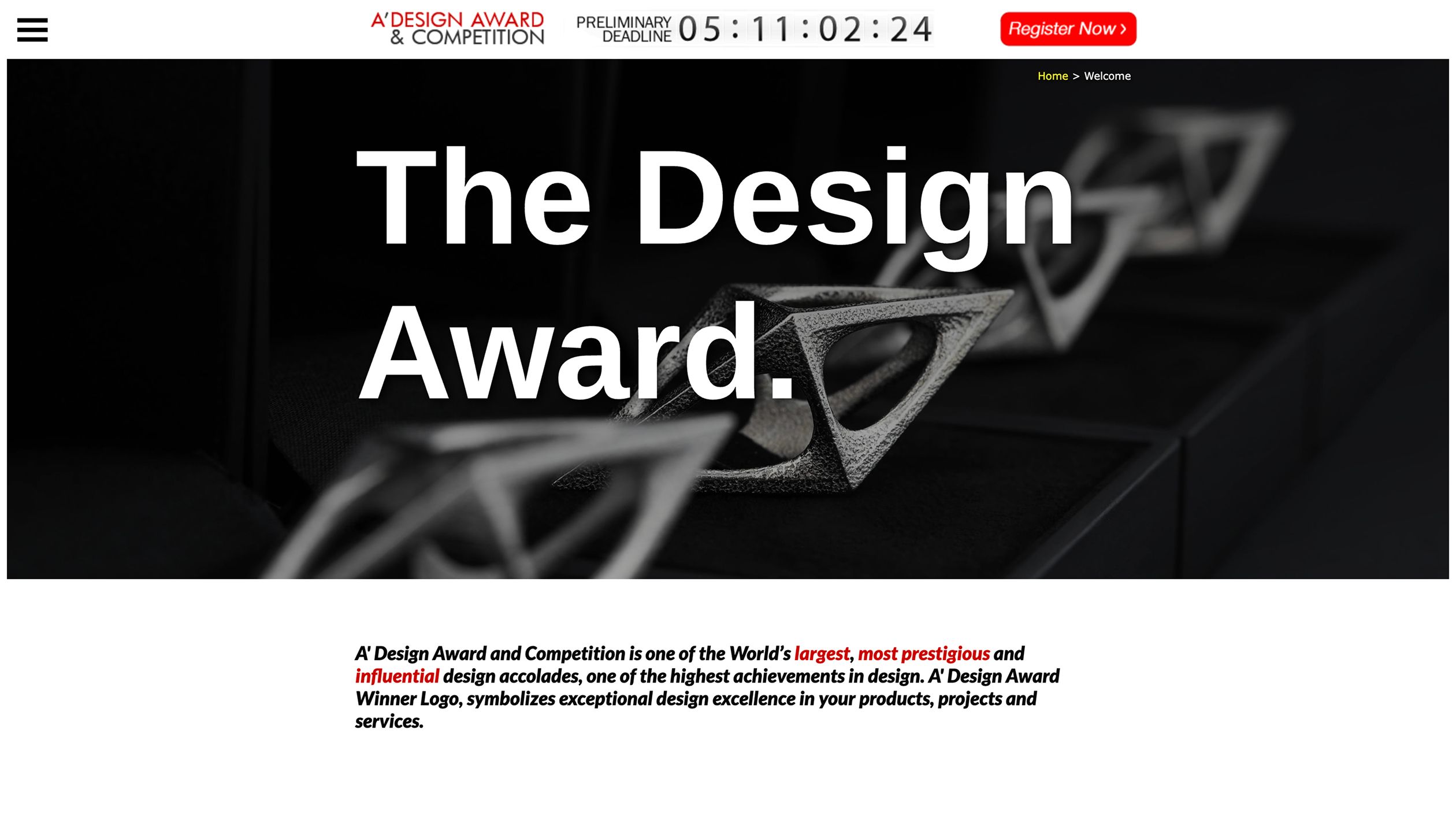
This one’s massive — hundreds of categories, global participation, and a jury of over 200 experts. A’ Design is known for giving space to both established studios and new voices finding their footing.
Focus: Multi-disciplinary — from architecture to UX.
Who can enter: Professionals, companies, students.
Jury: Designers, academics, and journalists from all over the world.
Fees: $1,000–$1,500 depending on category and deadline.
How to enter: competition.adesignaward.com
Why it’s worth it: It’s inclusive, loud, and global. If you want visibility and feedback from a huge creative network, this is your stage. It’s also one of the most approachable ux design competitions for students who are ready to compete in a serious arena, not just a classroom brief.
The Webby Awards
They call it the “Oscars of the Internet,” and they’re not exaggerating. The Webbys celebrate everything digital — websites, apps, campaigns, social, and even AI experiments. Each five-word acceptance speech has become a tiny viral event on its own.
Focus: Web, apps, digital experiences, advertising.
Who can enter: Agencies, brands, creators.
Jury: 2,000+ members of the International Academy of Digital Arts and Sciences.
Fees: $1,000–$2,500 depending on category.
How to enter: webbyawards.com
Why it’s worth it: Media attention, cultural cachet, and serious bragging rights. A Webby means your digital work didn’t just perform — it defined an era of the internet.
Cannes Lions International Festival of Creativity
Cannes Lions isn’t just an award; it’s a pilgrimage. For one week every summer, the creative world meets in the south of France to celebrate, network, and compete for that iconic golden lion.
Focus: Design, digital craft, brand experience, innovation.
Who can enter: Agencies, studios, brands, production companies.
Jury: The best of the best — global creative leaders.
Fees: Around £1,000–£2,000 depending on the category.
How to enter: canneslions.com
Why it’s worth it: Winning a Lion can change your career overnight. It’s the kind of recognition that turns agencies into legends.
European Design Awards
The ED-Awards celebrate Europe’s best — work that’s as smart as it is beautiful. What makes them unique? The jury isn’t made of random “design celebrities” but editors and journalists from Europe’s top creative magazines.
Focus: Communication, branding, digital, editorial.
Who can enter: Agencies and designers working with European clients.
Jury: Design editors and journalists.
Fees: €140–€250 depending on category and deadline.
How to enter: europeandesign.org
Why it’s worth it: The exposure is unmatched. Win here, and your work ends up in the pages that shape Europe’s design conversation.
The Netty Awards
Still young but growing fast, the Netty Awards celebrate standout work across web design, UX/UI, apps, and marketing. Think of it as the modern, more accessible sibling to the big names above.
Focus: Digital design, UX, innovation, marketing.
Who can enter: Agencies, startups, independent creators.
Jury: Industry professionals and digital experts.
Fees: $250–$395 USD per entry.
How to enter: nettyawards.com
Why it’s worth it: Perfect for smaller teams or freelancers who want credible recognition without paying premium entry fees. If you’re looking for a ui ux design contest where you don’t need a giant budget to get in the room, put this one on your list.
IDEA — International Design Excellence Awards
Run by the Industrial Designers Society of America, IDEA bridges physical and digital design. Winners don’t just get a trophy — their work is archived in the Henry Ford Museum, which is about as close as design gets to immortality.
Focus: Product, industrial, UX, and service design.
Who can enter: Designers, agencies, companies.
Jury: IDSA-selected experts and strategists.
Fees: $450–$800 depending on category.
How to enter: idsa.org/idea
Why it’s worth it: IDEA honors work that shapes industries. If you love when design meets engineering, this is your place.
W3 Awards
W3 might be less flashy than Cannes or Webby, but don’t underestimate it. It’s organized by the Academy of Interactive and Visual Arts and focuses purely on digital craft — web, UX, and interactive design that just works.
Focus: Websites, digital campaigns, UX/UI.
Who can enter: Agencies, designers, developers, creators.
Jury: Members of AIVA — creative pros with hands-on experience.
Fees: About $195–$295 per entry.
How to enter: w3award.com
Why it’s worth it: Affordable, respected, and practical. A great fit for digital agencies building credibility step by step.
Making Your Choice: Strategy Over Spray-and-Pray
Sure, you could submit to all of them — but unless your budget’s limitless, strategy wins. Pick a few that align with your goals.
Ask yourself:
– Which audiences am I trying to reach?
– Which awards resonate with those clients?
– Which ones align with my team’s strengths?
A focused win from Red Dot or i.design will do more for your credibility than ten obscure logos on a page.
And remember, the prep matters too. Writing those submission stories, reflecting on your process — it sharpens how you talk about your work. That’s valuable even if you don’t win (yet).
The Story Continues
Awards don’t make great designers — they reveal them. They turn silent craftsmanship into a public story. They remind your team that what you’re building matters. So as 2026 rolls closer, choose carefully. Enter what feels right, not what everyone else is chasing.
Frequently Asked Questions
What is the most prestigious design award?
It depends on what you design and who you want to impress. But a few names carry serious weight no matter where you are.
Red Dot has been around since 1955, and winning one still feels like a big deal. They cover everything from product design to branding, and yeah, the trophy looks good on a shelf (not gonna lie).
iF Design Award is the other heavyweight. If you're in industrial or product design, an iF Gold is basically the Oscar. Started back in 1953, it's grown into this massive global thing that clients actually recognize.
Worth mentioning: i.design award is newer but gaining traction fast, especially if you work in digital product design or UI/UX. What makes it different? They actually care about how you use AI in your process, not to penalize you, but to understand how modern tools fit into thoughtful design work. The jury's made up of practitioners who work on real products daily, not just academics. If you're hunting specifically for a ui ux design contest or even something that feels like the next generation of ux design competitions for students who later go pro, i.design is the one to watch.
How to participate in design awards?
It's less mysterious than it seems, but more work than you'd think.
1. Start by choosing wisely.
Look at past winners — does your work fit? Can you afford the entry fee? Is the timeline realistic? Decide whether it’s a professional UI/UX competition or one designed more for students and new creators — this changes what you emphasize in your submission.
2. Read. The. Guidelines.
Boring. But most rejections happen because someone missed a file format requirement or didn't include the right project info. These competitions have rules for a reason.
3. Get your materials together
You'll need:
- High-quality pictures prepared according to design award rules
- A project description that actually explains what you did and why it matters
- Technical specs (dimensions, materials, that kind of thing)
- Info about you or your team
- Sometimes process work, videos, or sketches
- Achievements and significance
3. Write like you're explaining it to a smart friend
Your description should tell a story. What problem did you solve? Why does it matter? What makes your approach different? Skip the jargon unless it's truly necessary.
4. Submit before you think you need to
Deadlines are firm, and websites crash. Give yourself buffer time. Pay the fee, double-check everything, hit submit. Save your confirmation email.
5. Then wait
Mark when winners get announced and prep your social media posts just in case. Manifestation, or whatever.
How to win a design award?
No guarantees, obviously. But there are patterns.
1. Show them something they haven't seen
Judges look at hundreds of entries. Thousands, sometimes. If your work solves a problem in a way that makes them pause and think "huh, why hasn't anyone done that before?" — you're in good shape.
2. Tell the story clearly
Your project might be brilliant, but if the judges don't understand it in 90 seconds, you're sunk. Be clear about the challenge, your process, and what changed because of your work.
3. Invest in documentation
This hurts to say, but amazing design with mediocre photos loses to good design with great photos. Every time. If you can't shoot it yourself, hire someone who can. Seriously.
4. Make it about people
User research, testing, real-world feedback — show that you designed for actual humans, not just your portfolio. Judges love evidence that your work landed.
5. Sustainability isn't optional anymore
If your project has environmental or social benefits, say so. Loudly. This matters more every year, and rightly so.
6. Pick the right category
Sometimes the difference between winning and getting overlooked is just... submitting to the right bucket. Study where similar projects placed before. A project that feels too commercial in a student category, or too conceptual in a commercial ui ux design contest, can quietly kill your chances.
7. Don't skip the small stuff
Incomplete entries get tossed. It's that simple. Check your submission three times before you hit send.
8. Time it right
Fresh work tends to perform better. If your project is three years old, it might feel dated to judges who are seeing what's happening right now.
9. Enter more than once
One submission to one competition? That's not a strategy. If you're serious about winning, you need multiple shots across different awards. It's a numbers game, partly.
10. Learn from losing
Because you probably will, at least at first. Most of us do. Look at what won instead of your project — what did they communicate better? What did you miss?